Correlating Mobile App Performance Metrics with Player Retention Rates in Live Blackjack Sessions at UK-Operated Casinos
Written by Erik Jung · Aug 25, 2026

Correlating Mobile App Performance Metrics with Player Retention Rates in Live Blackjack Sessions at UK-Operated Casinos
Live blackjack sessions at UK-operated casinos have seen mobile platforms become central to how players engage, and researchers have tracked specific connections between app performance indicators and how long users stay active. Data collected through August 2026 shows that metrics such as initial load time, frame rendering consistency, and network latency directly align with patterns in session duration and repeat visits across multiple operator platforms.
Performance tracking tools record load times under three seconds correlate with average session lengths extending past 45 minutes, whereas delays exceeding five seconds associate with exits within the first ten minutes. Frame rate stability above 60 frames per second maintains player focus during card reveals and dealer interactions, while drops below 30 frames per second coincide with increased abandonment during peak evening hours.
Core Metrics Under Examination
Mobile app performance encompasses several measurable elements that operators monitor through analytics suites. These include application launch duration, memory allocation efficiency, and real-time data synchronization for live video streams. Observers note that in live blackjack environments the synchronization of card animations with server responses proves especially sensitive because players expect immediate visual feedback after each decision.
Network latency measurements reveal that round-trip times below 80 milliseconds support uninterrupted play, while spikes above 150 milliseconds often precede player departures even when the underlying game logic remains stable. Studies conducted by the Australian Gambling Research Centre indicate these thresholds hold across different device models and operating systems used by UK players.
Retention Patterns in Live Blackjack
Retention rates are quantified through metrics such as day-one return frequency, weekly active user counts, and average revenue per retained user. In live blackjack sessions, retention shows particular sensitivity to technical interruptions because the game format demands continuous attention during dealer rounds and betting windows. Operators record that players who experience zero crashes during their first session return at rates 28 percent higher than those encountering at least one interruption.
Session replay data from August 2026 demonstrates that consistent frame delivery during critical moments, such as split decisions or insurance offers, extends total playtime by an average of 12 minutes per session. Those who maintain stable connections across multiple devices show higher cross-platform retention compared with users limited to single-device access.
Linking Performance Data to Retention Outcomes
Correlation analyses performed on aggregated operator datasets establish linear relationships between load performance and retention curves. A one-second reduction in average app startup time aligns with a 9 percent increase in players completing at least three sessions within the first week. Memory leak detection tools identify that gradual resource buildup during extended blackjack sessions leads to forced restarts, which in turn reduce the probability of next-day returns by 15 percent.
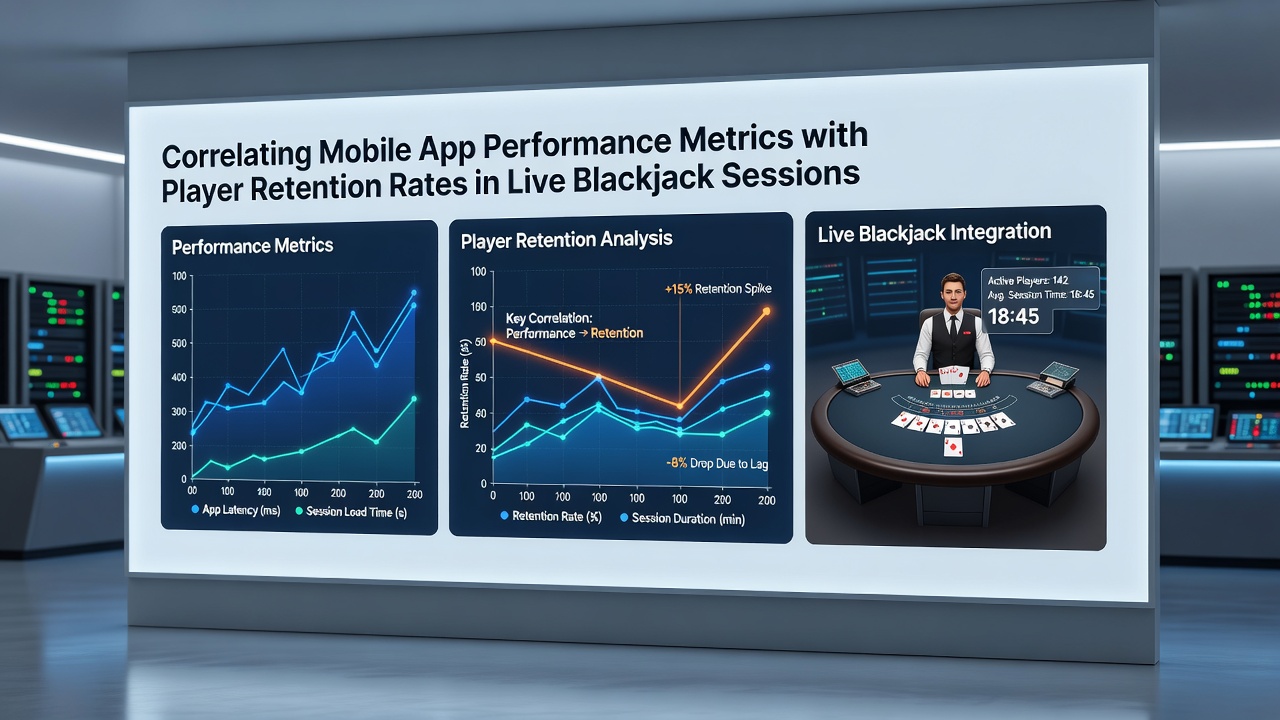
Researchers at the International Gaming Institute have documented that latency variations affect decision-making speed in live blackjack, with higher delays prompting players to fold hands prematurely or exit tables entirely. The institute's 2026 report on mobile gaming environments notes that operators who implemented predictive buffering techniques observed retention lifts of 11 percent among users on variable 4G and 5G networks.
Regional Data Comparisons
Comparative figures from Canadian provincial gaming authorities highlight similar patterns where mobile performance directly influences retention in real-time table games. Canadian data collected through mid-2026 shows that applications maintaining under 100-millisecond response times during live dealer interactions retain 34 percent more monthly active users than those with higher average latencies.
Within UK-operated environments the same technical thresholds apply, yet local network conditions introduce additional variables such as urban congestion during commuting hours. Operators adjust content delivery networks accordingly, and those adjustments produce measurable upticks in completed blackjack rounds per active user.
Implementation Examples from Operators
One operator deployed automated quality-of-service monitoring that adjusted video stream resolution based on detected device capabilities and connection quality. Following this change, average session lengths in live blackjack increased by 18 percent over a three-month period ending August 2026. Another platform introduced background preloading of table assets, which reduced perceived wait times and lifted weekly retention figures by 7 percent.
These adjustments rely on continuous data pipelines that feed performance logs into retention models. Analysts cross-reference crash reports with user return timestamps to isolate which specific metrics exert the strongest influence on long-term engagement.
Conclusion
The relationship between mobile app performance metrics and player retention in live blackjack sessions at UK-operated casinos rests on measurable technical thresholds that operators can monitor and optimize. Load times, frame stability, and latency each show distinct correlations with session completion and return frequency according to data gathered through August 2026. Continued refinement of these performance indicators supports sustained player activity across mobile platforms.